
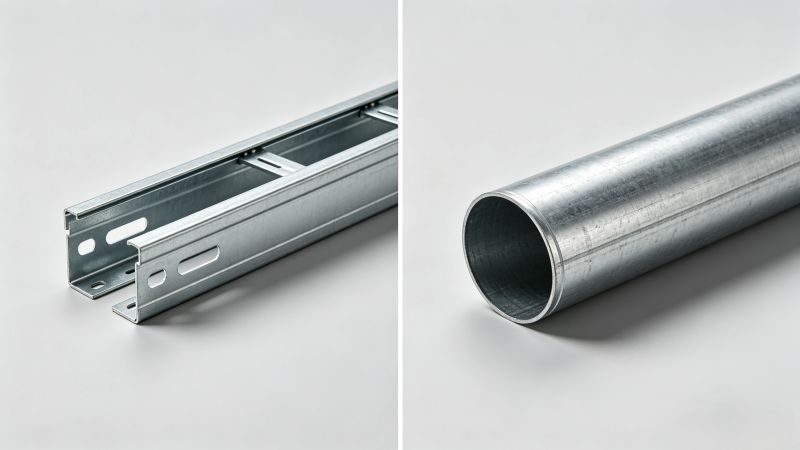
Choosing between cable tray and conduit systems significantly impacts project cost, installation time, and long-term maintenance. This comprehensive comparison helps electrical engineers, contractors, and facility managers make informed decisions based on real project requirements.
Table of Contents
What Is Cable Tray?
Cable tray is an open or partially enclosed support system designed to route and protect electrical cables. It provides continuous support along cable runs while allowing easy access for modifications, inspections, and heat dissipation.
Key characteristics:
- Open structure design
- High cable capacity
- Easy cable access and modification
- Superior heat dissipation
- Lower material cost per meter
What Is Conduit?
Conduit is a tubular enclosure that fully surrounds cables, providing complete physical protection. Available in rigid metal, flexible metal, and non-metallic versions, conduit offers maximum cable protection in demanding environments.
Key characteristics:
- Fully enclosed protection
- Excellent mechanical and chemical resistance
- Higher material cost
- More labor-intensive installation
- Limited cable capacity per run
Cable Tray vs Conduit: Key Differences at a Glance
| Comparison Factor | Cable Tray | Conduit |
|---|---|---|
| Installation Time | Fast (pre-fabricated) | Slow (threading, bending) |
| Cable Capacity | High (multiple cables) | Low (1-3 cables typically) |
| Heat Dissipation | Excellent (open design) | Limited (enclosed) |
| Cable Access | Easy (open top) | Difficult (pull required) |
| Mechanical Protection | Moderate | Excellent |
| Fire Resistance | Standard models | Superior (fire-rated options) |
| Maintenance | Easy inspection | Requires opening |
| Future Expansion | Simple additions | Complex and costly |

When to Choose Cable Tray
Ideal Applications for Cable Tray
Cable tray systems excel in environments where flexibility and capacity matter:
Industrial Manufacturing Facilities
- High cable density areas
- Frequent system modifications
- Power and control cable routing
- Cost-effective for long cable runs
Commercial Buildings
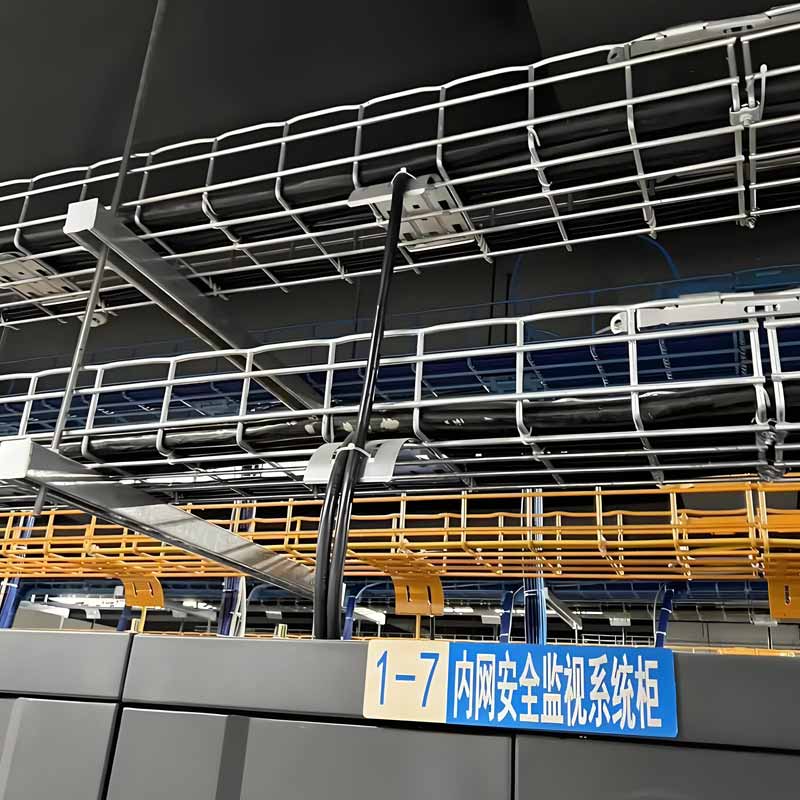
- Data centers with high cabling volumes
- Office building vertical risers
- Retail shopping centers
- Healthcare facility cable management
Power Generation and Distribution
- Solar power installations
- Wind farm cable routing
- Substation cable management
- Renewable energy projects
Data and Communication Centers
- Network cable management
- Server room installations
- Structured cabling systems
- Fiber optic cable routing
Advantages of Cable Tray
Cost efficiency:
- 40-60% lower material cost than conduit
- 50-70% faster installation time
- Reduced labor requirements
- Lower total project cost
Operational benefits:
- Easy cable identification and labeling
- Quick troubleshooting access
- Simplified system expansion
- Better airflow prevents overheating
Scalability:
- Add cables without system shutdown
- Modular design allows extension
- Accommodates future technology upgrades
- Supports varying cable sizes
When to Choose Conduit
Ideal Applications for Conduit
Conduit systems provide superior protection where environmental hazards exist:
Hazardous Environments
- Chemical plants with corrosive atmospheres
- Oil and gas facilities
- Mining operations
- Areas with explosive gases or dust
Underground Installations
- Direct burial applications
- Underground parking structures
- Tunnel cable routing
- Subsurface utility corridors
High-Traffic Areas
- Parking garages
- Loading docks
- Manufacturing floors with heavy equipment
- Areas with frequent physical impact risk
Fire-Sensitive Zones
- Hospital operating rooms
- High-rise building risers
- Fire escape routes
- Emergency power circuits
Advantages of Conduit
Protection capabilities:
- Complete physical barrier
- Chemical and moisture resistance
- Fire-rated options available
- UV protection for outdoor use
Regulatory compliance:
- Required in hazardous locations (Class I, II, III)
- Mandatory for underground installations
- Fire code compliance in specific areas
- Explosion-proof options available
Longevity:
- 50+ year service life (metal conduit)
- Corrosion-resistant coatings
- Minimal maintenance requirements
- Resistance to physical damage
Cable Capacity Comparison
Cable Tray Capacity
A 300mm wide, 75mm high cable tray can accommodate:
- 50+ control cables (8mm diameter)
- 20-25 power cables (12mm diameter)
- Mixed cable configurations with 40% fill ratio
Advantages:
- Single tray for multiple cable types
- Easy cable grouping and separation
- Support for large cable bundles
- Accommodates future additions
Conduit Capacity
A 50mm (2-inch) conduit typically holds:
- 4-6 control cables (8mm diameter)
- 2-3 power cables (12mm diameter)
- Limited by fill ratio (40% maximum)
Limitations:
- Multiple conduits required for high cable volumes
- Separate conduits for different voltage levels
- Complex routing for numerous cables
- Higher material costs for multiple runs
Installation Complexity Comparison
Cable Tray Installation Process
Step-by-step efficiency:
- Mount support structures (2 hours/100m)
- Connect tray sections (3 hours/100m)
- Lay cables directly into tray (2 hours/100m)
- Secure cables with ties (1 hour/100m)
Total: 8 hours per 100 meters
Key advantages:
- No threading or bending required
- Pre-fabricated sections
- Simple connection methods
- Minimal specialized tools
Conduit Installation Process
Step-by-step complexity:
- Plan routing and measure (3 hours/100m)
- Cut and thread conduit sections (5 hours/100m)
- Install support structures (3 hours/100m)
- Connect fittings and boxes (4 hours/100m)
- Pull cables through conduit (6 hours/100m)
Total: 21 hours per 100 meters
Challenges:
- Requires threading equipment
- Bending requires specialized tools
- Cable pulling increases labor time
- More potential for installation errors
Heat Dissipation and Ventilation: Cable Tray vs Conduit
Cable Tray Thermal Performance
Open design benefits:
- Natural convection cooling
- Heat escapes from all sides
- Lower operating temperature
- Reduced risk of cable degradation
Optimal for:
- High-current power cables
- Cable bundles generating heat
- Enclosed spaces with limited airflow
- Critical systems requiring thermal management
Conduit Thermal Considerations
Enclosed design limitations:
- Heat trapped inside conduit
- Limited heat transfer through walls
- Derating factors reduce cable capacity
- Higher risk of insulation breakdown
Mitigation required:
- Larger conduit sizes needed
- Reduced cable fill ratios
- Additional ventilation systems
- Higher-rated insulation materials
Maintenance and Future Expansion
Cable Tray Maintenance
Easy access advantages:
- Visual inspection without opening
- Quick cable identification
- Simple cable addition or removal
- Easy fault location
Future expansion:
- Add cables to existing tray
- Extend tray length easily
- Modify routing without disruption
- Accommodate technology upgrades
Conduit Maintenance
Access challenges:
- Requires junction box access
- Cable pulling for inspection
- Difficult fault identification
- Time-consuming modifications
Future expansion limitations:
- Pull new cables through existing conduit
- Limited by conduit capacity
- May require new conduit runs
- Disruptive installation process
Industry-Specific Recommendations: Cable Tray vs Conduit
Industrial Manufacturing: Choose Cable Tray
Reasons:
- High cable density requirements
- Frequent system modifications
- Cost-effective for large facilities
- Easy maintenance access
Hazardous Facilities: Choose Conduit
Reasons:
- Regulatory compliance requirements
- Chemical and explosion protection
- Mandatory for classified locations
- Safety-critical applications
Data Centers: Choose Cable Tray
Reasons:
- Massive cable volumes
- Frequent equipment changes
- Structured cabling flexibility
- Cost efficiency at scale
Healthcare Facilities: Hybrid Approach
Recommendation:
- Cable tray for non-critical areas
- Conduit for patient care zones
- Fire-rated conduit for emergency circuits
- Code compliance prioritization
Code Compliance Considerations
NEC Requirements
Cable tray applications (NEC Article 392):
- Permitted for industrial facilities
- Acceptable for commercial buildings
- Specific fill ratio requirements
- Grounding and bonding rules
Conduit requirements (NEC Articles 342-362):
- Mandatory for hazardous locations
- Required for underground installations
- Specific material standards
- Fire resistance classifications
IEC Standards
Cable tray standards (IEC 61537):
- Load capacity testing
- Dimensional specifications
- Safety factor requirements
- Installation guidelines
Conduit standards (IEC 61386):
- Mechanical strength testing
- Environmental protection ratings
- Fire performance classification
- Material specifications
Conclusion
Choose cable tray when you need cost efficiency, high capacity, easy maintenance, and future flexibility—ideal for industrial plants, data centers, and commercial buildings.
Choose conduit when environmental protection, regulatory compliance, and maximum physical security are priorities—essential for hazardous locations, underground installations, and fire-critical zones.
Many large-scale projects benefit from hybrid approaches, using cable tray for general routing and conduit for specific high-protection areas.
Need expert guidance for your cable management project? Our engineering team provides customized recommendations based on your specific requirements, budget, and regulatory environment. Contact us for a free consultation and competitive quotation.