
Table of Contents
Cable tray storage protects straight sections, fittings, covers, supports, and finishes between factory dispatch and installation. A good storage plan keeps bundles stable, dry, identified, accessible, and separated from damaging site traffic. It also preserves the condition needed for accurate inspection and efficient installation. This guide explains the practical controls procurement teams, warehouses, and contractors should establish.
Quick answer
For reliable cable tray storage, inspect each delivery before unloading, place material on level supports above the ground, protect it from standing water and incompatible chemicals, and follow the supplier’s stacking limits. Keep long sections supported at several aligned points so they do not twist or sag. Store fittings and hardware in labeled groups, preserve ventilation beneath weather covers, and recheck all material before installation.
Inspect deliveries before storage
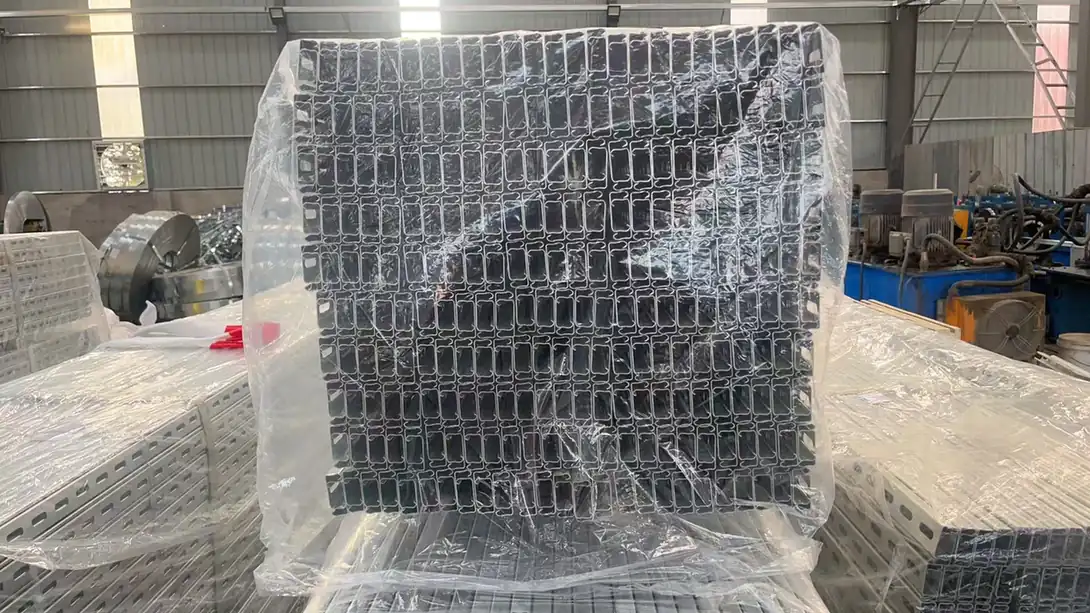
Cable tray storage begins at receiving. For cable tray storage, compare bundle labels, packing lists, drawings, and purchase documents before material is moved into the yard or warehouse. Record tray type, dimensions, material, finish, quantity, fitting type, and accessory packages. Photograph packaging damage and visible deformation while the shipment condition is still clear.
During cable tray storage, check for bent side rails, distorted rungs, crushed edges, damaged coatings, wet packaging, missing covers, and loose hardware. Quarantine questionable material rather than mixing it with accepted stock. The site’s cable tray inspection checklist should define who records damage, who approves repairs, and how replacement items are tracked.
Choose a suitable storage area
The cable tray storage area should be level, drained, secure, and clear of vehicle routes, welding, grinding, concrete splatter, paint overspray, and chemical handling. Keep material away from roof leaks and locations where water can pool. If indoor space is unavailable, establish a raised, ventilated outdoor zone rather than placing bundles directly on soil or paving.
Plan cable tray storage access before bundles arrive. Forklifts or lifting equipment need a stable approach, while workers need room to read labels and remove the required bundle without climbing over stock. The US OSHA materials handling and storage requirements state that stored materials must not create a hazard and that storage areas should be kept free from conditions that cause tripping, fire, or explosion hazards.
Stack and support tray sections correctly
| Material group | Storage method | Main risk to control |
|---|---|---|
| Straight tray sections | Level, aligned bearers with stable bundle restraints | Twisting, sagging, edge damage |
| Covers and dividers | Flat, separated, and supported along their length | Bending and surface scratches |
| Fittings | Grouped by type and dimension on shelves or pallets | Mixing, crushing, missing pieces |
| Fasteners and accessories | Sealed, labeled containers in a dry area | Loss, corrosion, wrong assembly |
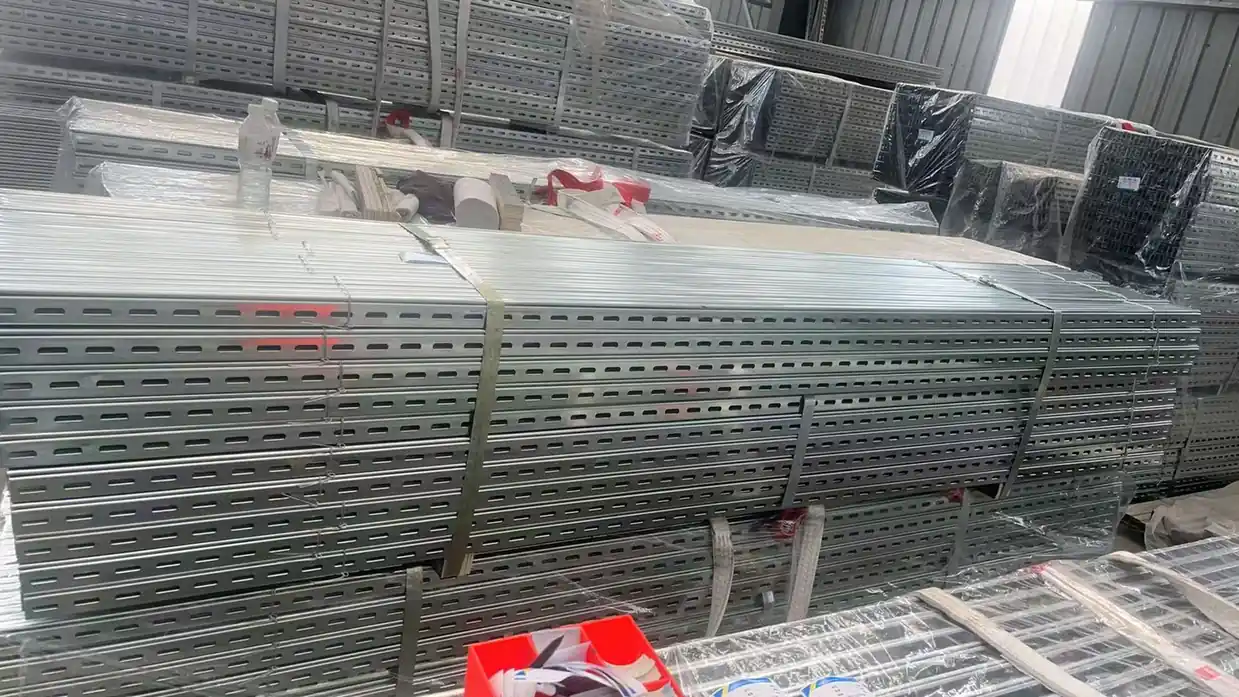
For cable tray storage, use bearers of equal height and align them vertically between stacked bundles. Uneven support can transfer load into tray edges and cause permanent distortion. Do not exceed the supplier’s package or stacking guidance. Cable tray storage arrangements should remain stable after straps are removed, so plan a separate picking area for opened bundles.
Do not use tray bundles as platforms, workbenches, or supports for unrelated materials. Heavy items placed on covers or perforated sections can bend components that appear undamaged from a distance. Keep different widths and finishes separated to reduce selection errors during installation.
Control moisture and weather exposure
Outdoor cable tray storage needs weather protection without trapping condensation. Use a cover that sheds rain but leaves airflow around the bundle. Do not wrap wet material tightly in impermeable film. Inspect covers after wind or heavy rain, and remove standing water from the surrounding area promptly.
During cable tray storage, surface finish changes the risk but does not eliminate it. Galvanized, stainless steel, aluminum, painted, and nonmetallic products can all be damaged by poor handling or incompatible contamination. Keep cement dust, salts, acids, alkaline cleaners, and metal grinding debris away from stored tray. Ask the supplier for cleaning and repair procedures before treating stains or coating damage.
Plan lifting and handling
Handling controls are part of cable tray storage because most damage occurs when bundles are moved. Use lifting points and equipment suited to the bundle length and weight. Spread forks sufficiently to support long material, keep loads balanced, and avoid chains or narrow slings that crush side rails. Never drag tray sections across the ground or across one another.
Safe cable tray storage requires defined maximum manual handling weights and team-lift procedures from site policy and local requirements. Wear gloves appropriate for metal edges and maintain clear communication around lifting equipment. If packaging must be cut, control straps so they cannot recoil toward workers or scratch the finish.
Maintain identification and inventory control
Every cable tray storage location should connect to the bill of materials. Use weather-resistant labels that show product type, width, depth, length, material, finish, project area, and purchase reference. Keep fittings and accessories linked to the straight sections they serve. A simple location code prevents crews from opening multiple bundles to find one item.
Cable tray storage benefits from first-in, first-out control where prolonged exposure could affect packaging or protective films. For accurate cable tray storage records, update quantities whenever material is issued, returned, damaged, or moved. Preserve traceability for products that require batch or inspection records. For incoming production lots, the 400 脳 100 脳 2440 mm perforated cable tray page illustrates why exact dimensions should remain part of inventory identification.
Reinspect before installation
End cable tray storage with a release inspection. Confirm dimensions, finish, straightness, fittings, fasteners, and covers against the latest approved drawings. Look for corrosion, trapped moisture, coating damage, deformation, missing labels, and contamination. Use only the supplier-approved repair method, and replace components when damage could affect fit, load, bonding, or cable protection.
The IEC 61537:2023 cable tray and cable ladder systems standard addresses product-system requirements and tests. Storage does not replace those requirements; it preserves the delivered condition so the installed system can match the selected and documented components.
FAQ
Can cable trays be stored outdoors?
Yes, when the product and packaging are suitable and the storage area is raised, drained, ventilated, secure, and protected from damaging contamination.
Should outdoor bundles be wrapped tightly?
No. Tight wrapping can trap moisture. Use weather protection that sheds water while allowing ventilation, following supplier instructions.
How high can cable tray bundles be stacked?
Use the supplier’s packaging and stacking guidance plus the site’s load and stability assessment. Do not apply a generic height to every bundle.
How should small accessories be stored?
Keep fasteners, couplers, clamps, and bonding parts in sealed, labeled containers linked to the correct tray type and project area.
What should be checked before tray is issued?
Verify identity, quantity, dimensions, finish, straightness, cleanliness, hardware, and the absence of corrosion or handling damage.
Create a storage plan before delivery
Effective cable tray storage is a controlled handoff between procurement, logistics, warehousing, and installation. Define the receiving inspection, storage locations, support method, weather protection, handling equipment, inventory labels, and release inspection before the first truck arrives. That preparation reduces avoidable damage and keeps the correct components available when installation begins.