
A heavy duty cable ladder is built for routes where ordinary cable support may not give enough stiffness, span, or installation confidence. Large power cables, long straight runs, industrial plants, utility rooms, and outdoor service corridors can all place serious demands on the ladder, supports, couplers, and fixing hardware.
This guide explains how to specify a heavy duty cable ladder for high-load cable routes. It focuses on load review, span, rung spacing, material, finish, accessories, and the information procurement teams should prepare before ordering.

When a Heavy-Duty Ladder Makes Sense
A heavy duty cable ladder is usually considered when cable weight, support span, heat dissipation, or maintenance access makes a lighter tray less suitable. The open-rung structure supports large cables while leaving space for ventilation, inspection, and cable pulling.
It is not only about buying a thicker product. The full route should be reviewed: straight sections, bends, reducers, couplers, supports, cable fill, and the environment around the installation. A heavy duty cable ladder works best when those details are agreed before the purchase list is released.
Start With Cable Load
The first input for a heavy duty cable ladder is the cable schedule. Cable type, outside diameter, quantity, weight per meter, and route grouping all affect the required ladder strength. Future spare capacity should also be discussed before the ladder width and support spacing are finalized.
Do not estimate load from tray width alone. Two routes with the same width can carry very different cable weights. Buyers should provide cable data and drawings so the ladder and support system can be reviewed as one package.
Cable Ladder Options Compared
| Option | Typical use | What to confirm |
|---|---|---|
| Standard cable ladder | General power and control cable routes | Cable load, width, rung spacing, and support span |
| Heavy duty cable ladder | High-load routes, larger cables, and longer spans | Load class, side rail depth, material thickness, couplers, and supports |
| Hot-dip galvanized ladder | Outdoor or corrosive industrial areas | Coating requirement, cut-edge treatment, and fastener compatibility |
| Powder coated cable ladder | Indoor color-coded or clean visual routes | Coating durability, color requirement, and site exposure |
| Custom cable ladder | Special widths, bends, equipment entries, or non-standard geometry | Drawing approval, fabrication tolerance, finish, and installation access |
Span and Support Planning
A heavy duty cable ladder can still perform poorly if support locations are wrong. Span depends on the ladder design, cable load, route geometry, and project specification. Supports should be planned near bends, risers, drops, and equipment entries, not only at convenient structural points.
For related support hardware, review PowerCableTray heavy duty galvanized ladder cable tray, hot-dip galvanized cable ladders, and slotted strut channel. Ladder and support hardware should be selected together.
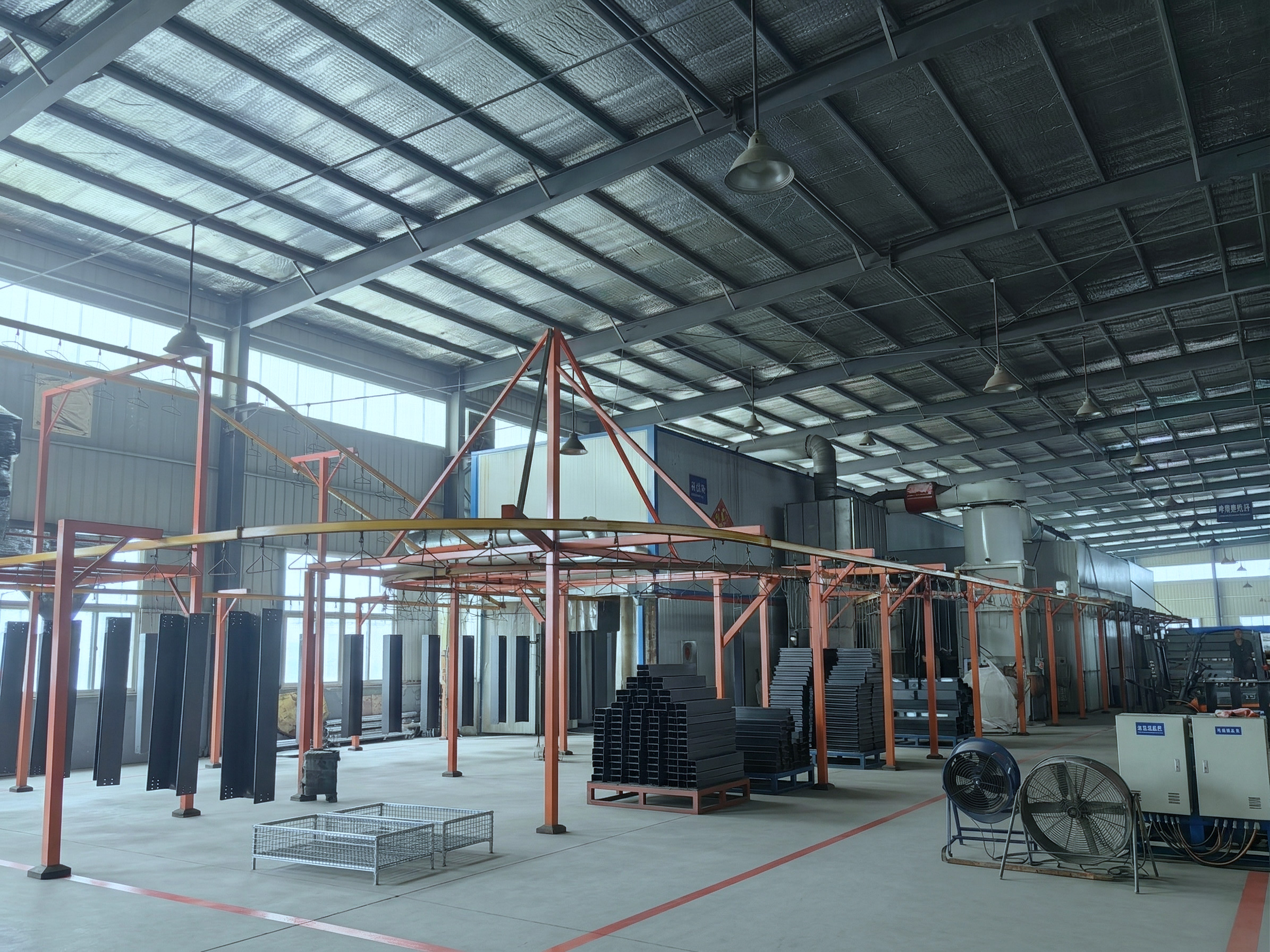
Rung Spacing and Cable Support
Rung spacing affects how well cables are supported between ladder cross members. Large armored cables may bridge wider spaces more easily than smaller flexible cables, but the final spacing should follow the cable type, bend radius, pulling method, and project requirements.
A heavy duty cable ladder should also provide enough room for cable cleats, separators, ties, or other fixing details where required. Check fixing access before approving the rung pattern.
Material and Finish Selection
Material and finish should match the installation environment. Indoor electrical rooms, outdoor industrial areas, coastal facilities, chemical spaces, and utility corridors may all need different corrosion protection. A heavy duty cable ladder is often expected to last in demanding spaces, so coating and fastener choices matter.
Hot-dip galvanized steel is often used for outdoor steel support systems, while stainless steel or coated options may be preferred in specific environments. The project specification should define material, coating, fasteners, and any repair method for cut or drilled areas.
Bends, Risers, and Couplers
Route changes are often where weak details appear. A heavy duty cable ladder route should use bends, risers, reducers, and couplers that match the straight sections in width, side height, load expectation, and finish. Mixing light fittings into a heavy route can create installation and maintenance problems.
Ask for drawings that show every route change. The coupler locations should leave enough access for tightening, inspection, and later replacement if a section is damaged.
Standards and Project Review
For metal tray system language, NEMA VE 1 is a useful industry reference. Installation teams may also review the Cable Tray Institute codes and standards overview and the NFPA National Electrical Code where U.S. electrical work is involved.
These references do not replace the project drawings or engineer approval. A heavy duty cable ladder should be checked against the actual cable schedule, support design, local code requirements, and owner specification.
Installation Access and Maintenance
A heavy duty cable ladder can carry a demanding route, but it still needs access for installation and maintenance. Leave room to place cables, tighten couplers, add cleats, inspect supports, and clean around the ladder. Overhead routes should also consider lifting method and safe work access.
Maintenance teams may need to add cables later. If the route is fully packed on day one, future upgrades become harder. Spare width and clear working space can be more useful than a route that only satisfies the first installation.
Ordering Checklist
Before ordering a heavy duty cable ladder, confirm cable schedule, total cable weight, ladder width, side rail height, rung spacing, material, finish, support span, fitting list, coupler type, bend radius, route drawings, and installation environment. Each heavy duty cable ladder section should have a clear route location and matching support detail.
Separate straight sections, bends, risers, reducers, covers if required, and support hardware in the purchase list. A clear schedule reduces mismatched fittings and helps the supplier prepare a complete cable route package.
FAQ
What is a heavy duty cable ladder used for?
A heavy duty cable ladder is used for high-load cable routes where larger cables, longer spans, or demanding environments need stronger cable support.
How do I choose the right ladder width?
Start with the cable schedule, cable outside diameters, fill allowance, future spare capacity, and any separation or cleating requirements.
Does heavy duty mean longer support spacing?
Not automatically. Support spacing depends on ladder design, cable load, route geometry, fittings, and project engineering approval.
Which finish is best for outdoor routes?
Outdoor steel routes often use hot-dip galvanized finishes, but the final choice should follow the environment and project specification.
What information should buyers send for a quotation?
Send cable schedule, route drawings, load requirements, ladder width, material, finish, fitting list, support span, and installation environment details.
Final Takeaway
A heavy duty cable ladder should be specified as part of a complete route system, not as a standalone tray item. Cable load, span, support hardware, fittings, finish, and maintenance access all affect the final performance of the installation.
If your project needs high-load ladder tray, hot-dip galvanized cable ladders, or matching support hardware, send PowerCableTray your drawings and cable schedule. The team can help review a practical route package before production.