
Table of Contents
Introduction
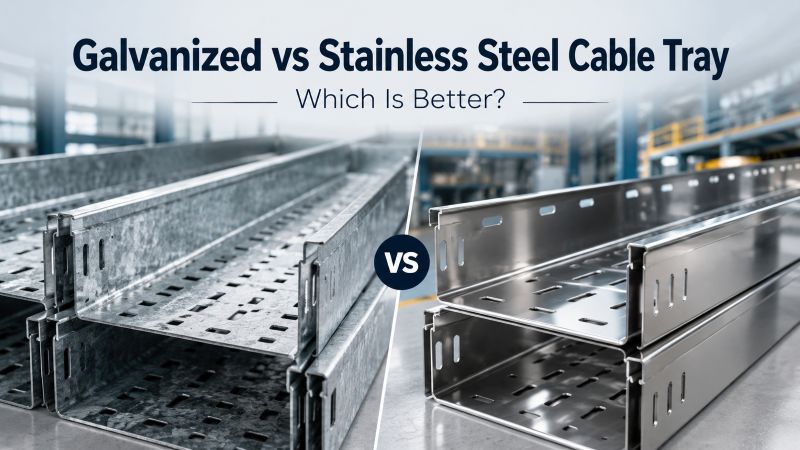
Choosing between a galvanized cable tray and a stainless steel cable tray is one of the most common decisions in industrial cable management projects. Both materials are widely used in power distribution systems, factories, commercial buildings, and outdoor installations, but their performance varies significantly depending on the environment and application requirements.
Many engineers and project managers struggle to determine which option provides the best balance between corrosion resistance, structural strength, service life, and installation cost. Selecting the wrong material can lead to premature corrosion, excessive maintenance expenses, or unnecessary project costs.
This guide explains the key differences between galvanized and stainless steel cable trays, compares their advantages and disadvantages, and helps you choose the right solution for your project.
What Is a Galvanized Cable Tray?
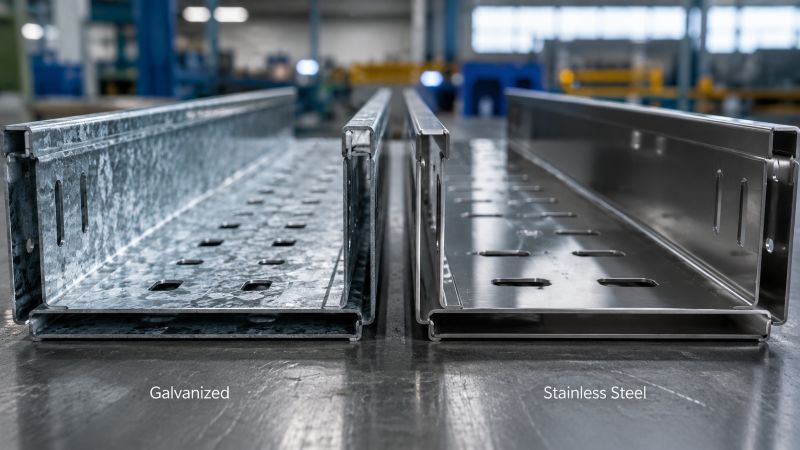
A galvanized cable tray is typically manufactured from carbon steel coated with a protective zinc layer. The zinc coating protects the steel substrate from corrosion by acting as a sacrificial barrier.
There are two main galvanizing methods used in cable tray manufacturing:
- Pre-galvanized steel
- Hot-dip galvanized steel
Pre-galvanized trays are coated before fabrication and are commonly used in indoor commercial environments. Hot-dip galvanized trays are coated after fabrication, creating a thicker zinc layer that provides stronger corrosion protection for industrial and outdoor applications.
Galvanized cable trays are widely used because they offer a good balance between structural strength and cost efficiency.
What Is a Stainless Steel Cable Tray?
A stainless steel cable tray is manufactured using corrosion-resistant stainless steel materials such as SS304 or SS316. Unlike galvanized steel, stainless steel contains chromium, which forms a passive protective layer against rust and chemical attack.
Stainless steel trays are commonly used in:
- Chemical plants
- Food processing facilities
- Marine environments
- Pharmaceutical factories
- Coastal installations
These environments often expose cable systems to moisture, chemicals, or salt air where galvanized coatings may deteriorate over time.
Main Differences: Galvanized vs Stainless Steel Cable Tray
Corrosion Resistance
Corrosion resistance is one of the biggest differences between these two materials.
Hot-dip galvanized cable trays provide excellent corrosion protection for most outdoor and industrial environments. However, the zinc coating can eventually wear away in highly corrosive conditions.
Stainless steel cable trays offer significantly better long-term corrosion resistance because the protective chromium layer continuously regenerates when exposed to oxygen. This makes stainless steel ideal for harsh chemical and marine environments.
Structural Strength
Both galvanized steel and stainless steel trays provide strong mechanical support for heavy cable loads.
Galvanized steel trays generally offer higher rigidity at lower material cost. Stainless steel trays provide excellent strength as well, but their structural performance depends on alloy type and thickness.
For heavy industrial power systems, both materials can perform effectively when properly engineered.
Cost Difference
Cost is one of the main factors influencing material selection.
Galvanized cable trays are usually more affordable and are commonly selected for commercial and standard industrial projects.
Stainless steel cable trays are significantly more expensive due to higher raw material and manufacturing costs. However, they may reduce long-term maintenance and replacement expenses in corrosive environments.
Maintenance Requirements
Galvanized trays may require periodic inspection and maintenance if installed in corrosive areas. Over time, damaged zinc coatings may need repair or replacement.
Stainless steel trays generally require minimal maintenance because of their superior corrosion resistance. This is especially important in difficult-to-access installations where maintenance costs are high.
Appearance and Surface Finish
Stainless steel trays usually provide a cleaner and more premium appearance. This makes them suitable for visible installations in pharmaceutical plants, food facilities, and modern commercial buildings.
Galvanized trays have a more industrial appearance but remain widely accepted for most engineering projects.
Galvanized vs Stainless Steel Cable Tray Comparison Table
| Feature | Galvanized Cable Tray | Stainless Steel Cable Tray |
|---|---|---|
| Corrosion Resistance | Good | Excellent |
| Outdoor Performance | Very Good | Excellent |
| Chemical Resistance | Moderate | Very High |
| Initial Cost | Lower | Higher |
| Maintenance Needs | Moderate | Low |
| Service Life | Long | Very Long |
| Industrial Strength | High | High |
| Marine Environment Suitability | Limited | Excellent |
This comparison helps engineers quickly evaluate which material better fits their project requirements.
When Should You Use Galvanized Cable Tray?
Galvanized cable trays are ideal for:
- Standard industrial facilities
- Commercial buildings
- Indoor electrical systems
- Warehouses
- Manufacturing plants
- Outdoor projects with moderate corrosion exposure
Hot-dip galvanized trays are especially popular in industrial power distribution systems because they provide strong structural performance at reasonable cost.
For projects where budget efficiency is important, galvanized steel often provides the best overall value.
When Should You Use Stainless Steel Cable Tray?
Stainless steel cable trays are recommended for:
- Coastal installations
- Offshore facilities
- Chemical plants
- Food and beverage factories
- Pharmaceutical environments
- High-humidity facilities
These environments demand maximum corrosion resistance and long-term durability.
SS316 trays are especially suitable for marine environments due to their superior resistance to salt corrosion.
Common Engineering Mistakes When Selecting Tray Material
One common mistake is choosing galvanized trays for highly corrosive environments without considering long-term maintenance costs. While galvanized systems may reduce initial investment, corrosion can significantly shorten service life in harsh conditions.
Another issue is selecting stainless steel trays for standard indoor projects where corrosion risk is minimal. In these cases, the higher material cost may not provide meaningful operational benefits.
Material selection should always consider:
- Installation environment
- Expected service life
- Maintenance accessibility
- Total lifecycle cost
Practical Industrial Example
A food processing facility initially installed hot-dip galvanized cable trays in a high-humidity production area. After several years, engineers observed corrosion around tray joints and supports due to constant washdown exposure.
The facility later upgraded to SS304 stainless steel trays. The new system significantly reduced maintenance requirements and improved long-term reliability.
This example demonstrates why environmental conditions are critical when choosing cable tray material.

FAQ
Is stainless steel better than galvanized steel for cable trays?
Stainless steel provides superior corrosion resistance, especially in chemical or marine environments.
Are galvanized cable trays suitable for outdoor use?
Yes. Hot-dip galvanized cable trays are widely used outdoors and offer excellent corrosion protection.
Which cable tray material lasts longer?
Stainless steel generally provides longer service life in harsh environments.
Is stainless steel cable tray more expensive?
Yes. Stainless steel trays usually cost more than galvanized trays due to material and manufacturing costs.
What is the best cable tray material for coastal areas?
SS316 stainless steel is commonly recommended for coastal and marine environments because of its strong salt corrosion resistance.
Conclusion
Choosing between galvanized and stainless steel cable trays depends on environmental conditions, corrosion exposure, budget, and long-term maintenance expectations.
Galvanized trays provide excellent structural strength and cost efficiency for most industrial and commercial applications, while stainless steel trays offer superior corrosion resistance for highly demanding environments.
Understanding the differences between these materials helps engineers design safer, more reliable, and more cost-effective cable management systems.
If you need help selecting the right cable tray material for your project, contact our engineering team for technical support and product recommendations.