
جدول المحتويات
A food processing cable tray must do more than hold conductors. It should support orderly routing while allowing sanitation teams to see, reach, wash, and inspect the surrounding area. The best food processing cable tray choice depends on the hygiene zone, cleaning method, chemical exposure, cable load, support arrangement, and local electrical requirements. This guide explains how to turn those operating conditions into a practical specification.
إجابة سريعة
For many wet or frequently cleaned areas, a stainless steel food processing cable tray with an open wire-mesh construction is a useful starting point because it exposes cable runs and reduces broad horizontal surfaces. It is not automatically correct for every location. Dry packaging areas, protected utility spaces, and routes needing greater mechanical shielding may justify perforated tray or enclosed trunking instead. Specify the food processing cable tray system only after documenting the actual environment and consulting the project electrical and hygiene teams.
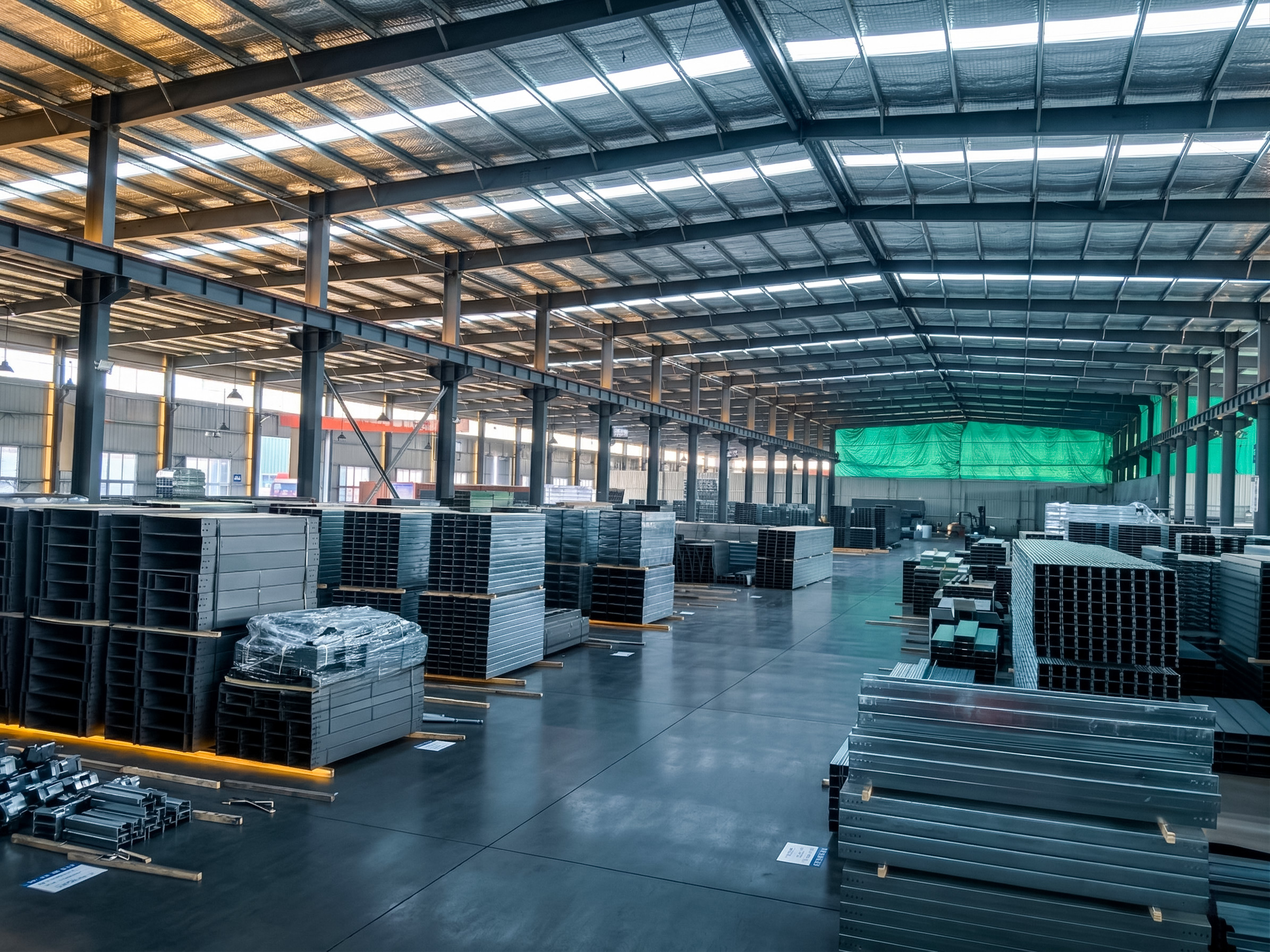
Classify the installation area
Begin by mapping the food processing cable tray route rather than selecting a catalog item. A food processing cable tray above an exposed production line faces different risks from one inside a dry electrical room. Record whether the route is in a wet, dry, corrosive, high-temperature, chilled, or outdoor area. Note whether cleaning uses low-pressure rinsing, high-pressure spray, foam, steam, or chemical agents, and identify where water can collect.
Also document proximity to open product, traffic, moving equipment, maintenance platforms, and potential impact points. In the United States, 21 CFR Part 117 Subpart B provides current good manufacturing practice requirements relevant to plant sanitation and equipment conditions. The regulation does not choose a tray for a designer, but it helps explain why cleanability and sound installation details matter.
Choose the right tray style
| Tray style | Useful characteristics | Points to check |
|---|---|---|
| Wire mesh | High visibility, airflow, flexible field routing, limited flat surface area | Cable support, edge treatment, bend formation, washdown exposure |
| صينية مثقوبة | Continuous cable support with ventilation and added shielding | Drainage, residue accumulation, cover need, cleaning access |
| Enclosed trunking | Greater physical protection and separation from the surroundings | Ingress at joints, internal condensation, access for inspection |
An open صينية كابلات شبكية سلكية من الفولاذ المقاوم للصدأ can make visual checks easier and lets rinse water pass through. A perforated food processing cable tray supports cables across a broader surface and can be appropriate when smaller cables need continuous support. Enclosed trunking provides more protection, but its joints, covers, and interior require a deliberate inspection strategy. No food processing cable tray style compensates for poor positioning or inaccessible supports.
Select material and finish
Material selection should follow the real corrosion exposure. Stainless steel is often considered for a food processing cable tray in wet, humid, or chemically cleaned areas, but grade selection must account for the cleaning chemistry, concentration, temperature, contact time, and any chlorides in the environment. Obtain compatibility information for the complete system, including tray, brackets, bolts, washers, clamps, and bonding components.
Mixed materials can create localized corrosion problems, especially when moisture remains at contact points. A uniform specification is easier to review than a tray described only as 鈥渟tainless.鈥?Require the supplier to identify the material for the tray and each accessory. Where a solid-bottom solution is justified, review the available صينية الكابلات المثقبة من الفولاذ المقاوم للصدأ construction and confirm that its drainage and access suit the cleaning plan.
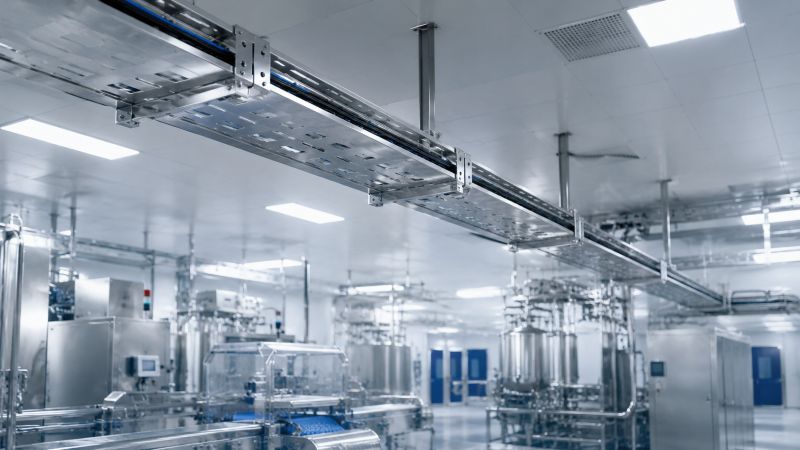
Design for cleaning access
Good food processing cable tray routing depends as much on space as on material. Keep the food processing cable tray far enough from walls, ceilings, pipes, and equipment for cleaning tools and inspection sightlines. Avoid creating narrow ledges or shadowed gaps that cannot be reached. Coordinate the route with process piping so leaks or condensation do not fall onto electrical cables.
Orient fittings and supports so liquid can drain rather than remain in pockets. Minimize unnecessary overlaps and blind cavities. Covers may protect cables from falling debris or spray in selected areas, but they also create another surface and can restrict access. Use them based on a documented hazard, not as a default. The cleaning team should review the planned food processing cable tray route before installation begins.
Coordinate supports and fasteners
Support spacing is an engineered decision based on tray type, span, cable load, fittings, and manufacturer data. The IEC 61537 cable tray systems standard is a recognized reference for cable tray and cable ladder systems, while the applicable project code and authority having jurisdiction remain decisive. Do not copy a spacing value from an unrelated installation.
Place supports where they remain accessible and do not interfere with sanitation. The food processing cable tray should not depend on process piping or unrelated equipment for support. Select fasteners, brackets, and clamps for the same environmental exposure as the tray. After cutting or forming wire mesh, remove sharp projections and use approved connectors so the finished route does not damage cable jackets or present a maintenance hazard.
Plan cable routing and protection
A food processing cable tray cannot make an unsuitable cable suitable for washdown. Verify cable jacket resistance to water, cleaning agents, temperature, flexing, oils, and other site conditions. Maintain required separation among power, control, communication, and safety circuits. Respect bend radius and pulling limits, and avoid overfilling the food processing cable tray because dense bundles are harder to inspect and may retain debris or moisture.
Use compatible clamps where movement, vertical runs, or vibration could shift cables. At equipment transitions, provide strain relief and an appropriate entry method. Route cables in an orderly single layer where the design allows, rather than creating tightly bound bundles at every interval. Labels should remain legible after repeated cleaning and should not introduce loose materials into production areas.
Build an inspection and maintenance plan
Before handover, inspect the complete food processing cable tray route for drainage, access, loose hardware, sharp edges, cable damage, unsupported fittings, and trapped construction debris. Confirm bonding and grounding using the project鈥檚 electrical design and applicable rules. Record the installed route and any approved deviations so maintenance teams know what should be present.
Routine checks should look for residue, corrosion, damaged finishes, loose clamps, cable movement, deformed supports, and additions that exceed the original design. Inspection frequency should reflect exposure and operating experience. When production changes, reassess the food processing cable tray rather than simply adding more cables to an existing route.
أخطاء المواصفات الشائعة
- Choosing material without checking the cleaning chemicals and temperatures.
- Placing the tray too close to a wall or ceiling for effective cleaning.
- Using inaccessible covers where routine inspection is necessary.
- Mixing tray and fastener materials without a corrosion review.
- Allowing cable bundles to become too dense for visual inspection.
- Setting support spacing before the actual cable load and fitting layout are known.
These errors are best corrected during layout review. A food processing cable tray specification should include the environment, tray style, material, accessories, load assumptions, support method, bonding requirements, cleaning access, and inspection expectations. That gives contractors and suppliers a testable basis for coordination.
الأسئلة الشائعة
Is wire mesh always the best food processing cable tray?
No. Wire mesh offers visibility and open drainage, but mechanical protection, cable support, exposure, and local requirements may favor perforated tray or trunking. Select by zone and risk.
Which stainless steel grade should be specified?
The correct grade depends on moisture, chlorides, cleaning chemistry, temperature, and contact time. Ask the cleaning chemical supplier and tray manufacturer for compatibility information rather than relying on a universal grade.
Should a food processing cable tray have a cover?
Only where the risk assessment supports one. Covers can reduce direct exposure but may make inspection and cleaning harder. Consider the hazard above the tray, drainage, access, and removal procedure.
How should support spacing be determined?
Use the tray manufacturer鈥檚 verified load data, actual cable load, fitting locations, installation orientation, and applicable code or standard. Do not use a generic spacing value for every route.
ما هي المعلومات التي ينبغي إرسالها مع الاستفسار؟
Provide tray dimensions, material, route length, fitting quantities, cable load, support arrangement, cleaning method, environmental exposure, and required accessories. Clear operating details help the supplier review the food processing cable tray configuration accurately.
Prepare a project-ready specification
A reliable food processing cable tray starts with a route-specific specification, not a material label alone. Define the hygiene zone, cleaning regime, cable load, access envelope, corrosion exposure, and support conditions before choosing the tray style. For protected runs that require enclosure, compare قنوات الكابلات الفولاذ المقاوم للصدأ with open tray options. Send the complete route information for a configuration review before procurement.